Phonics Museum - Learn to Read
Veritas PressEducational
3.519.00 Reviews
- Version
- 0.0.104
- Installs
- 10.00K
- Age Rating
- Everyone
Screenshots
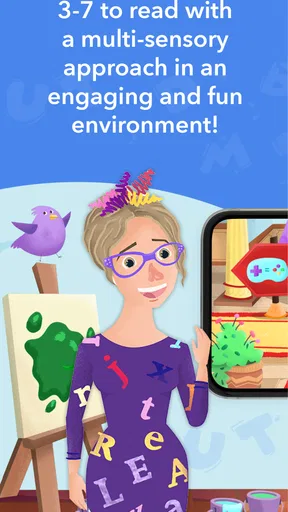
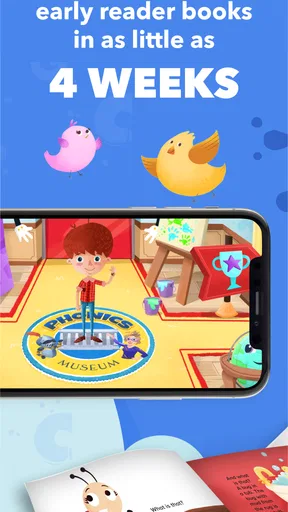
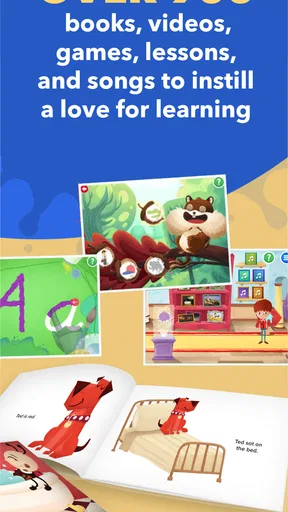
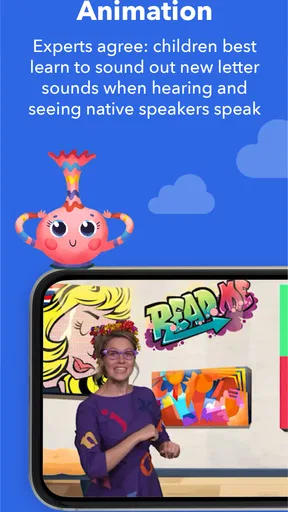
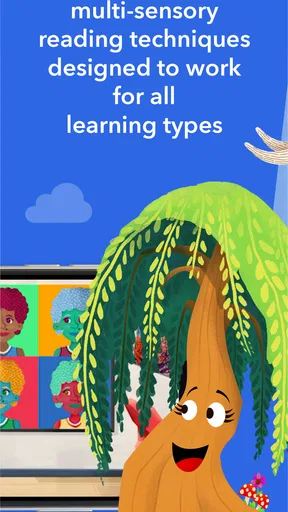
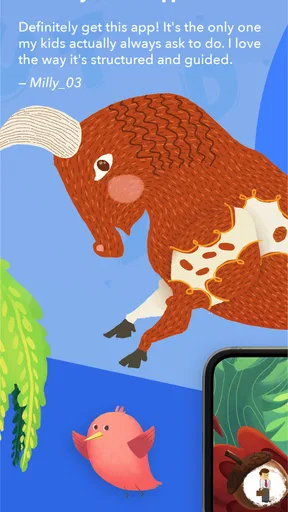
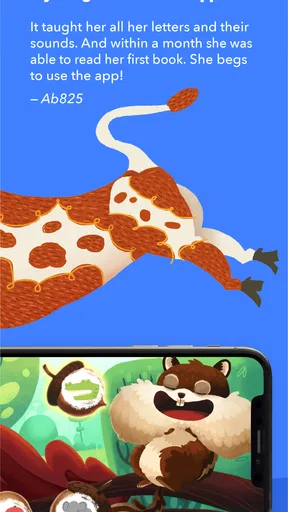
Our Review of Phonics Museum - Learn to Read
 Analysis by Appyee
Learning to read can feel like work when it is presented only as a lesson, so I appreciate the idea behind Phonics Museum - Learn to Read. I tried it as an educational game for early readers, and its main appeal is clear from the first sessions: it turns phonics practice into something children can approach as play rather than as another worksheet. The experience is aimed at helping kids connect letters and sounds, with a gentle museum theme that gives the learning a more inviting setting.
What matters most here is not whether it can replace a teacher or a complete reading program. It cannot. Its value is in giving a child a repeatable, low-pressure way to revisit early reading skills. I would recommend it to families who want a supplementary activity for short practice sessions, especially when a child responds better to pictures, sounds, and interactive prompts than to printed exercises.
How the first goals shape the experience
The early goal is easy for a child to understand: listen, recognize, and begin connecting sounds with written letters. That simplicity is a strength. A young learner does not need a complicated story or a large set of rules before getting started. The museum setting helps make the material feel less like a formal class, while the focus stays on the basic building blocks of reading.
In my experience, the best way to use it is beside the child at first. I would not simply hand over the device and assume the game explains everything perfectly. I would sit nearby, listen to how the child responds, and ask them to say the sound aloud before moving on. That small habit turns passive tapping into active practice and makes it easier to notice whether the child recognizes the sound or is only guessing from the picture.
The app is made by Veritas Press, and its educational identity is more important than the game label. This is not an action game with reading added as decoration. The reading objective is the reason to return, and the play elements are there to make repetition more comfortable. That makes it suitable for children who are just beginning phonics, but less interesting for an older reader who already reads simple words confidently.
The free entry point is useful for families who want to see whether the approach suits their child before committing to it. There are also in-app purchases ranging from $1.99 to $99.99 per item, so I would check the available content and purchase flow carefully before allowing independent use. The app itself is free, but “free” does not mean every part of the learning experience is necessarily included without additional spending.
Small sessions work better than long lessons
I found that the most sensible routine is to keep practice short and focused. A child who is still learning letter sounds can lose concentration quickly, even when the material is presented attractively. Instead of treating the game like a long sitting, I would use it for a brief activity after breakfast, during a quiet afternoon break, or before a bedtime story.
A useful routine is to let the child complete a small amount, then close the app and ask them to find one of the same sounds in a book, on a cereal box, or on a handwritten note. This is one of the strongest ways to make the game matter outside the screen. The app can prompt recognition, but everyday reading is where the connection becomes durable.
Parents should also listen for a common trap: a child may remember an image or the position of an answer without really understanding the sound. If an answer seems too quick, I would ask the child to repeat the sound and give another example. That extra step is more valuable than rushing toward the next activity.
Progress signals, challenge, and pacing
Educational games need to show children that they are moving forward, even when the skill itself develops gradually. Here, the sense of progress comes from completing learning activities and becoming more comfortable with the material, rather than from a traditional competitive score chase. That is appropriate for early literacy. A child who is hesitant at the beginning may become quicker and more confident simply through repeated exposure.
For parents, the most useful progress signal is not a badge or a completed screen. It is what the child can do without help afterward. Can they identify the sound when it appears in a different word? Can they say it clearly? Can they distinguish it from a similar sound? I would use the game as a starting point, then test one or two examples away from the device. This prevents the child from confusing familiarity with genuine learning.
The pacing feels best when the child is allowed to repeat a skill without being made to feel unsuccessful. Early readers need repetition, but they also need a sense that mistakes are manageable. If the game moves ahead before a child is ready, I would pause and revisit the earlier material rather than pushing through simply to unlock more content.
That is also where adult guidance matters. A child who needs extra time may not interpret difficulty in the same way an adult does. They may tap randomly, become frustrated, or decide that reading is something they are “bad” at. I would treat a difficult activity as a signal to slow down, say the sound together, and return later. The app works best as a patient practice tool, not as an automatic instructor that handles every learning need alone.
What keeps a child coming back
The museum theme gives the learning a destination, which is helpful because phonics practice can otherwise feel repetitive. The child has a reason to explore rather than simply answer isolated questions. Even so, the long-term pull is likely to depend on the individual child. Some children enjoy revisiting familiar material, while others need a parent to connect the activity to a story, a drawing exercise, or a search for letters around the house.
I would not choose this app expecting the same retention pressure as a deep entertainment game. Its challenge is educational repetition, not suspense, competition, or complex strategy. That is a positive for families who want calm practice, but a limitation for children who need a stronger game loop to stay interested. If your child quickly loses interest in gentle learning activities, the museum theme may not be enough on its own.
A practical way to improve retention is to give each session a small purpose. One day, the goal might be to listen carefully to a new sound. Another day, it could be to review two sounds that were confusing. Afterward, I would celebrate accurate effort rather than speed. This keeps the child focused on learning instead of tapping through the content as quickly as possible.
Where the difficulty curve helps and where it needs support
For a beginner, the gradual nature of phonics learning is more important than a dramatic increase in difficulty. The app is most useful when the child feels that each activity grows naturally from the previous one. I would watch for whether the learner can complete tasks independently before treating new material as a success. If they need constant prompting, the difficulty may be ahead of their current level, even if the app itself continues moving forward.
One non-obvious advantage of using a game for this purpose is that it gives a child more chances to encounter the same type of task without the social pressure of answering in front of a class. That can be especially helpful for a shy learner or for a child who becomes anxious when corrected. The trade-off is that the app may not explain a misunderstanding in the detailed, flexible way a parent or specialist can.
I would also avoid using it as the only literacy resource for a child with persistent difficulty distinguishing sounds. In that situation, the game can provide extra repetition, but direct support from a teacher, reading tutor, or speech professional may be more appropriate. The app is a supplement, not a diagnosis or a complete intervention.
Everyday use, device fit, and practical limits
A realistic use case would be a parent preparing dinner while a child completes a short supervised activity nearby. That can work well when the child already understands how to respond and only needs occasional encouragement. For a first session, however, I would stay involved. The child may need help understanding the instructions, pronouncing a sound, or deciding whether an answer was chosen for the right reason.
The game is available for devices running Android 7.0 or later, which makes it accessible on a range of older Android hardware. I would still test it on the actual family device before planning regular lessons. Screen size, speaker volume, and how easily a child can hold the device all affect an early-learning activity. Clear sound is particularly important because the phonics objective depends on hearing distinctions accurately.
Its Everyone age rating fits the intended audience, but that should not be confused with a guarantee that every child will find the experience suitable. Reading readiness varies widely. A child who is still learning to recognize letters may need more adult participation, while a confident reader may find the pace too basic. The right age is less important than the child’s current skill and attention span.
The current version is 0.0.104, and the app has been available since December 7, 2020. I mention that because parents sometimes expect an educational game to feel as polished and expansive as a major entertainment release. This is better judged by how well it supports a child’s particular learning routine than by how large or elaborate it feels.
The app has reached over 10K installs and holds a 3.5 average from 58 ratings, with 19 written reviews. Those figures suggest that it has attracted a modest audience and that user experiences are mixed rather than universally enthusiastic. I would take that as a reason to try the free portion with your child before buying additional content, especially if your child is sensitive to repetition or needs a very specific teaching style.
How it compares with familiar alternatives
Compared with printed phonics cards, this game offers sound and interaction in one place. That can make practice more inviting, and it gives a child immediate participation instead of asking them to sit with a stack of cards. Printed materials are still better when you want to move letters around, write answers, or practice away from a screen. I would use both rather than treating one as a replacement for the other.
Compared with general reading videos, the game has the advantage of asking the child to respond. Watching a video can introduce a sound, but it does not always show whether the child recognized it. Interactive practice gives parents more opportunities to observe the learner. On the other hand, a good adult-led story provides richer vocabulary, conversation, and meaning than a focused phonics activity can offer.
Compared with a full curriculum, this is lighter and easier to fit into a busy day. That is its practical strength. The trade-off is depth: families seeking a complete sequence of reading instruction, writing practice, comprehension work, and progress tracking may need a broader program. I would choose Phonics Museum for reinforcement and engagement, not as the sole plan for teaching reading from beginning to end.
My progression verdict
I see Phonics Museum - Learn to Read as a calm, approachable introduction to phonics for young children who benefit from interactive repetition. Its early goals are understandable, its museum presentation gives practice a little context, and its free starting point makes experimentation sensible. The strongest results will come when an adult connects the on-screen activity to spoken sounds, books, and letters in the child’s everyday world.
Its limitations are equally important. The game cannot adjust to every learning style as thoughtfully as a person can, and its gentle challenge may not hold the attention of children who want fast action or deep competition. The presence of paid items also means parents should review the available progression before spending. If your child needs a complete reading curriculum, detailed reporting, or intensive individual correction, I would look elsewhere or use this only as one small part of a wider plan.
For the right learner, though, the pacing is its best quality. It encourages practice without making early reading feel like a test. I would recommend trying a short session with a parent nearby, asking the child to explain sounds aloud, and then checking whether those sounds appear in a real book afterward. If that routine feels comfortable and the child returns willingly, the app earns a useful place in the learning schedule.
My final opinion is positive but measured: this is a worthwhile educational game for beginning phonics practice, especially for families who want a friendly alternative to worksheets. I would recommend it as a companion to reading together, not as a substitute for that essential human interaction.
Verdict
Strengths of Phonics Museum - Learn to Read
- Engaging phonics lessons combine letter sounds with memorable visual stories.
- Progressive activities help children move from basic sounds to blending words.
- Interactive exercises provide practice without requiring constant adult instruction.
- Child-friendly design makes early reading practice feel like a game.
- Suitable for preschool and early elementary learners building reading confidence.
Limitations of Phonics Museum - Learn to Read
- Some lessons may feel repetitive for children who learn reading quickly.
- Full access may require a subscription or additional in-app purchases.
- The app may offer limited value once a child has mastered basic phonics.
- Younger children may still need help navigating activities independently.
- Device screen time should be balanced with books and offline reading practice.
Similar Picks in This Category
View All
Little Panda Policeman
BabyBus4.0

Monster Trucks Game for Kids 2
Raz Games4.1

Little Panda's Chinese Recipes
BabyBus4.4

Little Panda's Restaurant
BabyBus4.4

Little Panda's Ice Cream Games
BabyBus4.3

Baby Panda Care
BabyBus3.8
Frequently Asked Questions
What is Phonics Museum - Learn to Read?
Phonics Museum - Learn to Read is an educational app designed to help young children build early reading skills through phonics instruction. It combines letter sounds, word practice, songs, animations, games, and interactive activities to make learning more engaging. The app generally follows a structured progression, helping children connect letters and sounds before moving toward blending sounds into simple words.
Is Phonics Museum - Learn to Read suitable for beginners?
Yes, the app is primarily aimed at children who are beginning to learn the alphabet, letter sounds, and basic reading. It can be useful for preschool and early elementary learners, although the ideal age depends on the child’s attention span and previous experience. Parents should explore the available lessons first, since some children may need additional guidance or a slower pace.
Does the app require an internet connection?
Some features or lesson content may require an internet connection, particularly during the initial download, account setup, updates, or access to online materials. Depending on the version and subscription, certain activities may be available offline after they have been downloaded. Before relying on it during travel or away from Wi-Fi, parents should open the relevant lessons and confirm that they work without an active connection.
Is Phonics Museum - Learn to Read free to use?
The app may offer free access to part of its content, while additional lessons, activities, or the complete learning program can require an in-app purchase or subscription. Availability and pricing may vary by platform, country, and promotional offer. Parents should review the purchase screen carefully, including renewal terms, before starting a trial or entering payment information.
Is Phonics Museum - Learn to Read safe and effective for children?
The app is designed as a child-focused learning tool and can provide useful practice with phonics when used consistently. However, it should support rather than replace interaction with a parent, teacher, or reading program. Adults should review privacy settings, parental controls, advertisements, and in-app purchase options before handing over the device. Progress is likely to be strongest when app activities are combined with reading aloud and offline practice.
Play our best games!


